2026-11-11 · B&C Motorworks & Towing
A vehicle that started yesterday can struggle on a cold morning. Cold conditions place more demand on starting while a battery may deliver less useful power. That does not mean every no-start is a battery failure. The sound of the starter, the brightness of the lights and the events leading up to the problem provide a better starting point than a guess.
Listen to what the vehicle actually does
Rapid clicking, a slow crank and lights that dim sharply can suggest that the starting system is not receiving enough power. A battery with a low charge is one possible reason; loose or corroded connections can create similar symptoms. A starter fault may also need consideration. Describe the behavior instead of deciding that one particular part must be replaced.
If the engine turns at its normal speed but never fires, the question is different. Fuel delivery, ignition, diesel starting aids or other systems may be involved. A jump start is not a universal no-start remedy. Make one clear observation, then avoid repeated long cranking attempts that further drain the battery or heat the starter.
Cold weather can reveal an existing weakness
A marginal battery may have had enough reserve during milder weather but less to spare when starting becomes harder. A pattern of slow starts, short trips or needing previous jumps is worth mentioning. The first cold morning can expose a problem that was developing rather than create an entirely new fault overnight.
Age is useful context, but it is not a complete battery test. The way the vehicle is used, its charging system and the battery’s condition also matter. If you know when the battery was fitted, share that information. Do not assume that a newer battery rules out a charging fault or a poor electrical connection.
Check safely without touching a damaged battery
Turn off lights, heated accessories and other unnecessary electrical loads before another starting attempt. If the battery is accessible, a visual look from a safe position may reveal obvious swelling, leakage or damage. Do not touch leaking material, lean over the battery or attempt a jump on a battery that appears damaged.
A frozen or damaged battery is not a candidate for an improvised boost. Follow the vehicle manual and seek assistance if the condition is uncertain. Battery placement can also differ from what you expect: it may be in the trunk, under a seat or connected through dedicated under-hood terminals. The correct connection points are determined by the manufacturer, not convenience.
Jump-start procedures belong to the vehicle manual
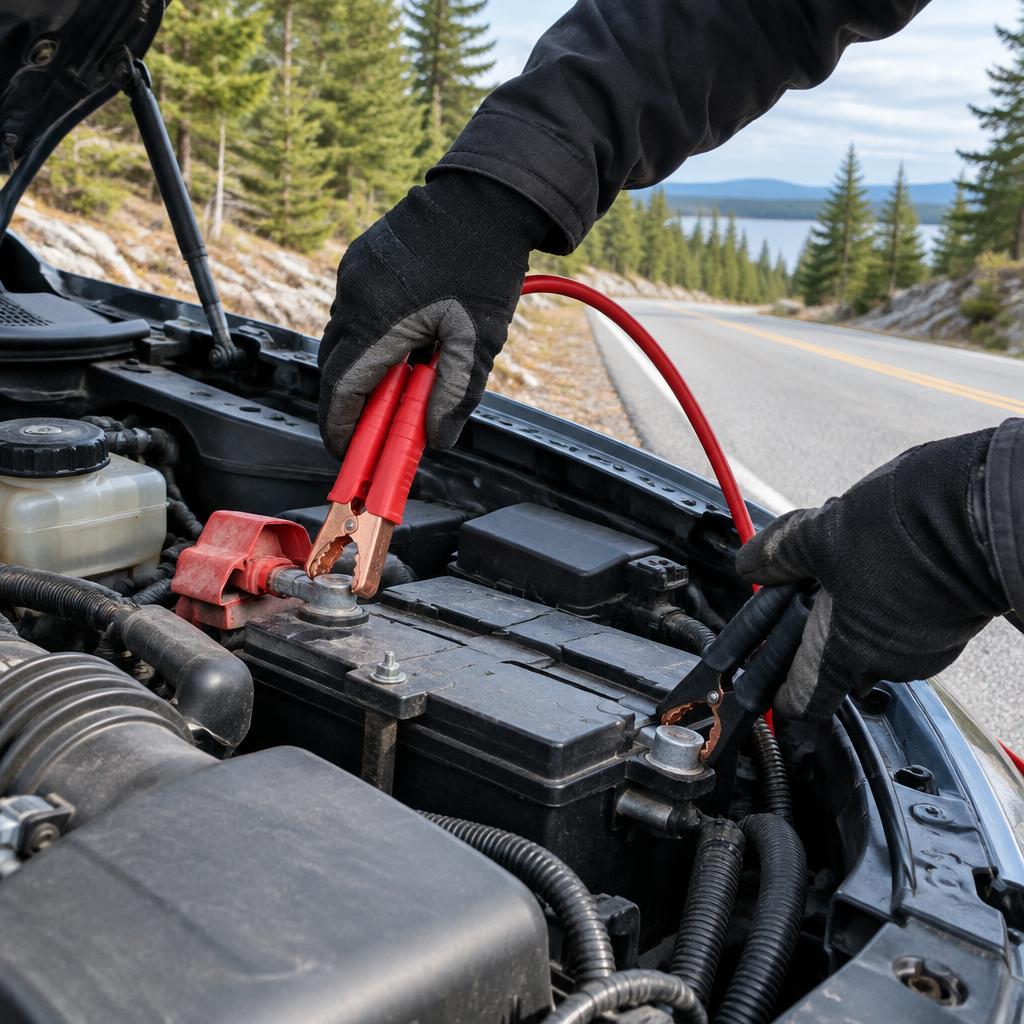
Modern vehicles can have particular connection sequences, remote terminals or restrictions. Hybrid and electric vehicles require their own instructions. Do not copy a procedure meant for a different model, and do not improvise around wiring or covers you do not recognize. Read the instructions for both vehicles and the equipment before attempting any connection.
Keep cables away from moving parts and do not let metal clamps touch each other. If the instructions are unavailable or you cannot carry out the procedure safely, ask for help. Calling with the year, make and model is useful because it identifies the vehicle, rather than simply saying that there is a battery under the hood.
- Describe clicking, slow cranking or normal cranking without starting.
- Switch off unnecessary electrical loads.
- Look for obvious damage without touching leaking material.
- Use only manufacturer-approved instructions or call for assistance.
A successful jump does not explain the cause
An engine that starts after a jump may still have a weak battery, charging fault or load drawing power while parked. Do not assume that a short period of idling restores everything or confirms the vehicle is ready for another cold night. If a warning light remains on or the engine stops again, describe that change before continuing.
Repeated jumps are a pattern worth addressing at a shop. Think about whether a light was left on, whether the vehicle sat unused or whether starting has gradually become slower. Auto and diesel repair at B&C’s East Baldwin service bay is an option to discuss alongside roadside help. The goal is to understand the recurring symptom, not just repeat the same temporary response.
Make the call useful and the waiting place safe
Have the town, road and exact parking position ready. Tell us whether the vehicle is in a driveway, roadside shoulder or enclosed garage. Mention restrictions that affect access to the battery or vehicle. If there is no safe room to work beside traffic, location becomes part of the request rather than a detail to leave until later.
Stay clear of passing vehicles and do not spend the waiting time making repeated unsuccessful attempts. A clear account of the problem helps distinguish a jump request from a tow or shop question. B&C offers jump starts and dead-battery assistance around East Baldwin; availability and the next step are confirmed by calling, with no assumption that every battery complaint can be resolved roadside.
Short journeys and parked electrical loads
Think about how the vehicle was used before the no-start. A series of short journeys may not give the charging system the same opportunity as a longer drive, particularly when heating, lights and other accessories are in use. That history does not prove a fault, but it gives the shop useful context. Mention if the vehicle has sat unused or if the battery has already needed charging.
An interior light, accessory or electrical problem can use energy while the engine is off. Some loads are obvious; others require an assessment to identify. Do not remove random fuses or disconnect unfamiliar wiring to hunt for a drain. Modern vehicles have systems that shut down in their own sequence, so an improvised electrical test may not produce a meaningful answer. Record any accessory left on and any recent electrical work.
If you use a charger or maintainer, make sure it is suitable for the battery type and follow the equipment and vehicle instructions. A charger is not a way to make a visibly damaged battery safe. Keep the work area appropriate for the equipment, protect cords and do not assume a displayed charge reading identifies every underlying issue. A battery can need further testing even after it accepts some charge.
The most helpful question is whether this is an isolated event or a repeating pattern. A single forgotten light and gradual deterioration call for different conversations. By describing the use history and symptoms honestly, you give the repair assessment more to work with than a simple request to replace the battery.